Biases and Decisions: The Hidden Dynamics in Chance-Based Games
Written by Carlo Baumann · Jul 29, 2026
Biases and Decisions: The Hidden Dynamics in Chance-Based Games
Chance-based activities encompass everything from casino table games to lotteries and online slots, where outcomes rest entirely on random processes rather than skill or strategy. Researchers have long examined how cognitive biases intersect with these environments to alter the way participants evaluate risks, interpret sequences, and commit to repeated plays. Data from behavioral studies show that mental shortcuts often override statistical probabilities, leading to systematic patterns in wagering behavior across different demographics and jurisdictions.
Core Biases Documented in Random Outcome Settings
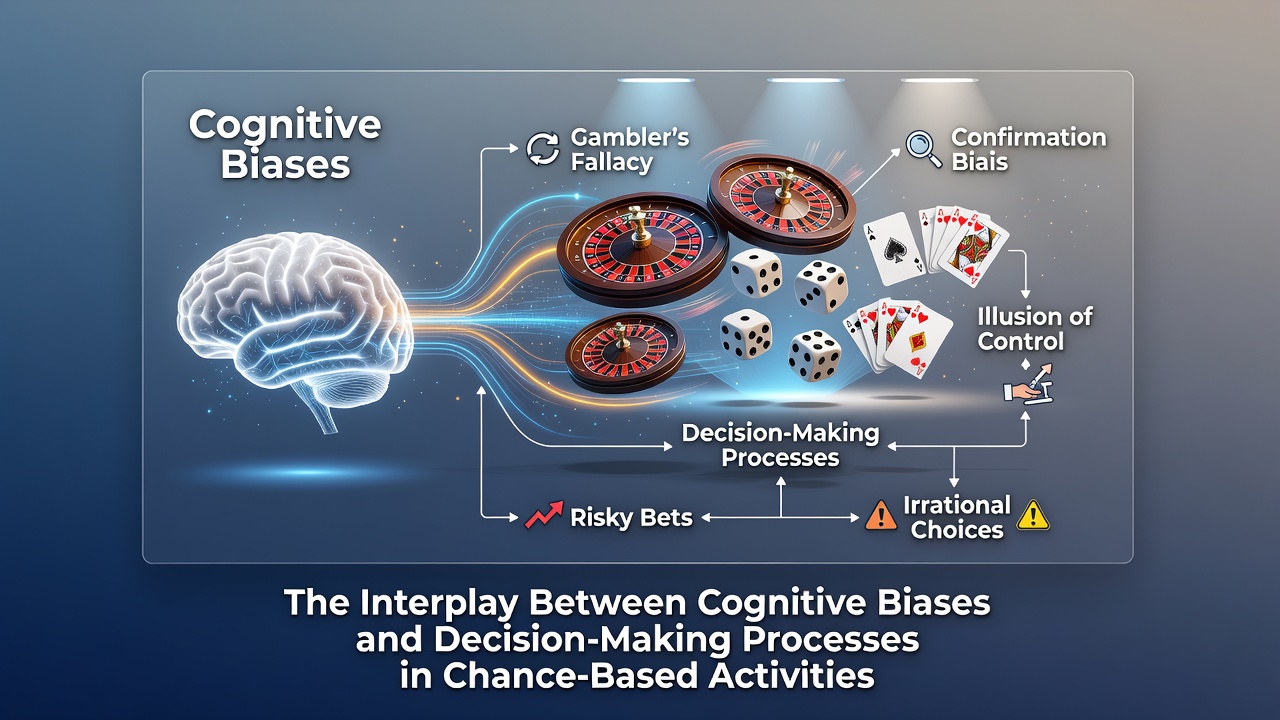
The gambler's fallacy stands out as one of the most frequently observed distortions, where individuals expect short-term results to balance out even when each event remains independent. Studies published through academic channels indicate that players who witness a streak of red on a roulette wheel tend to place larger bets on black, anticipating an imminent reversal despite the wheel's memoryless design. Availability heuristics compound this effect when recent wins or losses receive disproportionate weight in memory, prompting adjustments that ignore long-term house edges.
Loss aversion, identified in foundational work by behavioral economists, drives participants to chase losses more aggressively than they pursue equivalent gains. Figures from regulatory reports in Canada reveal that sessions extended after initial deficits correlate with higher overall expenditure, as individuals seek to recover sunk costs rather than accept realized outcomes. Confirmation bias further reinforces these tendencies by directing attention toward information that supports continued play while downplaying contradictory evidence such as payout tables or session statistics.
Decision Pathways Altered by Bias Interactions
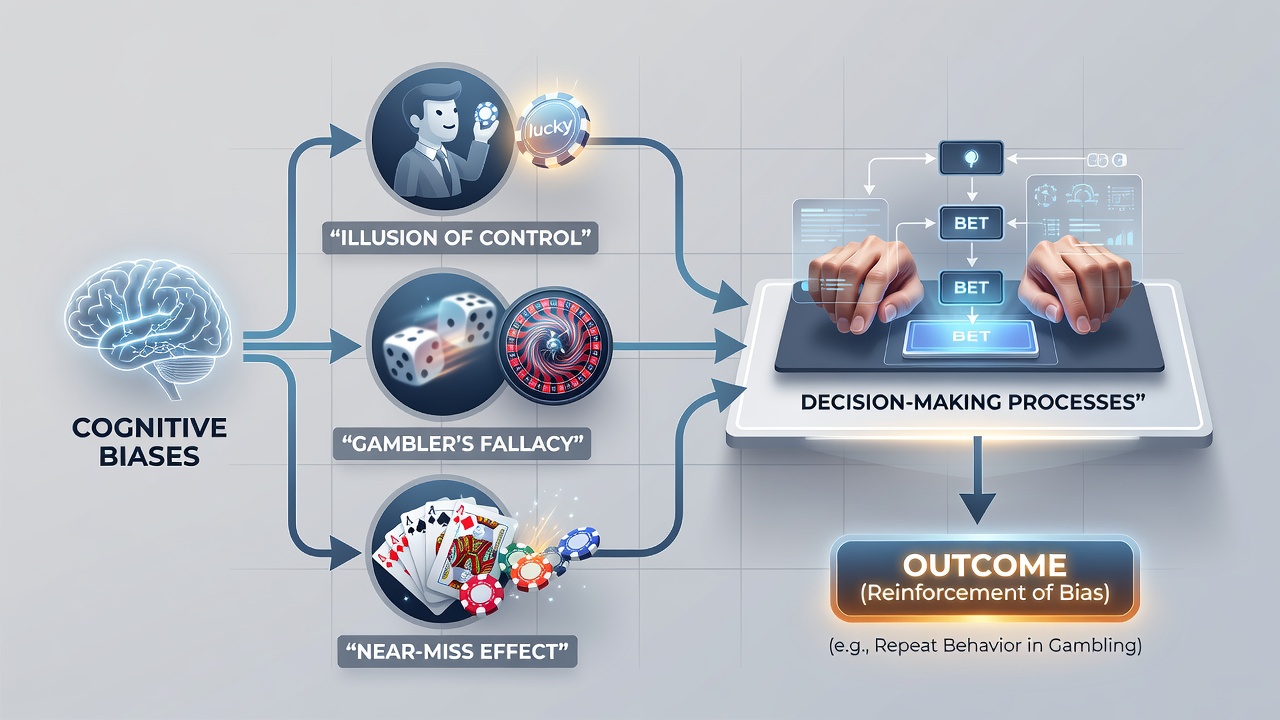
Multiple biases rarely operate in isolation. When the illusion of control merges with overconfidence, players may select specific numbers or machines under the assumption that personal rituals or prior familiarity can sway random generators. Research from the National Institutes of Health highlights how these combined influences sustain engagement even after repeated demonstrations of randomness through controlled experiments. In July 2026, emerging datasets from European longitudinal surveys are expected to provide updated metrics on how digital interfaces amplify these interactions through real-time feedback loops and visual cues.
Decision trees in chance settings become distorted when probability weighting skews perceived likelihoods. Low-probability jackpots receive inflated importance, while modest but consistent losses fade from consideration. Observers note that this weighting pattern appears consistently across slot play and lottery ticket purchases, with transaction records from Australian state lotteries showing clusters of increased volume following publicized large wins regardless of unchanged odds.
Empirical Evidence from Controlled and Field Studies
Laboratory protocols that simulate slot sequences demonstrate that participants adjust bet sizes based on near-miss events even when such outcomes carry no predictive value for future spins. Field data collected by the Nevada Gaming Control Board over multi-year periods confirm similar adjustments among real-money players, with average session lengths extending when near-misses occur at higher frequencies. These patterns hold after controlling for variables such as time of day and machine denomination.
Longitudinal tracking by university research teams in Canada has quantified how repeated exposure to chance environments strengthens certain biases rather than diminishing them through experience. Participants with greater cumulative hours of play exhibited stronger adherence to the gambler's fallacy compared with novices, suggesting that familiarity can entrench rather than correct faulty reasoning. Cross-regional comparisons indicate that regulatory disclosures about randomness produce modest shifts in behavior only when presented at the point of decision rather than in general terms.
Structural Factors That Amplify or Mitigate Effects
Interface design elements such as autoplay functions and rapid spin options reduce opportunities for reflective pauses that might otherwise interrupt bias-driven sequences. Industry reports from gaming associations note that platforms incorporating mandatory breaks or loss-limit prompts record lower rates of extended chasing behavior in aggregated user data. Conversely, environments lacking such features show sustained elevation in play intensity once initial biases take hold.
Educational interventions targeting statistical literacy yield mixed results according to evaluations from multiple sources. Brief tutorials on independence of trials produce temporary reductions in fallacy-based betting, yet effects dissipate within single sessions unless reinforced through ongoing feedback. Regulatory frameworks in various jurisdictions continue to test disclosure formats that present probabilities in formats more resistant to misinterpretation, such as expected value over 100 plays rather than per-spin percentages.
Conclusion
Cognitive biases interact with the inherent uncertainty of chance-based activities to produce predictable deviations from rational choice models. Evidence accumulated across laboratory, field, and regulatory datasets demonstrates that these influences operate through identifiable mechanisms that affect bet sizing, session duration, and game selection. Ongoing research scheduled for release around July 2026 aims to refine understanding of how digital environments interact with these established patterns, providing additional data points for both academic analysis and policy development.