Capital Preservation Dynamics Across Multi-Venue Wagering Portfolios: An Analytical Overview
Written by Taylor Krause · May 23, 2026
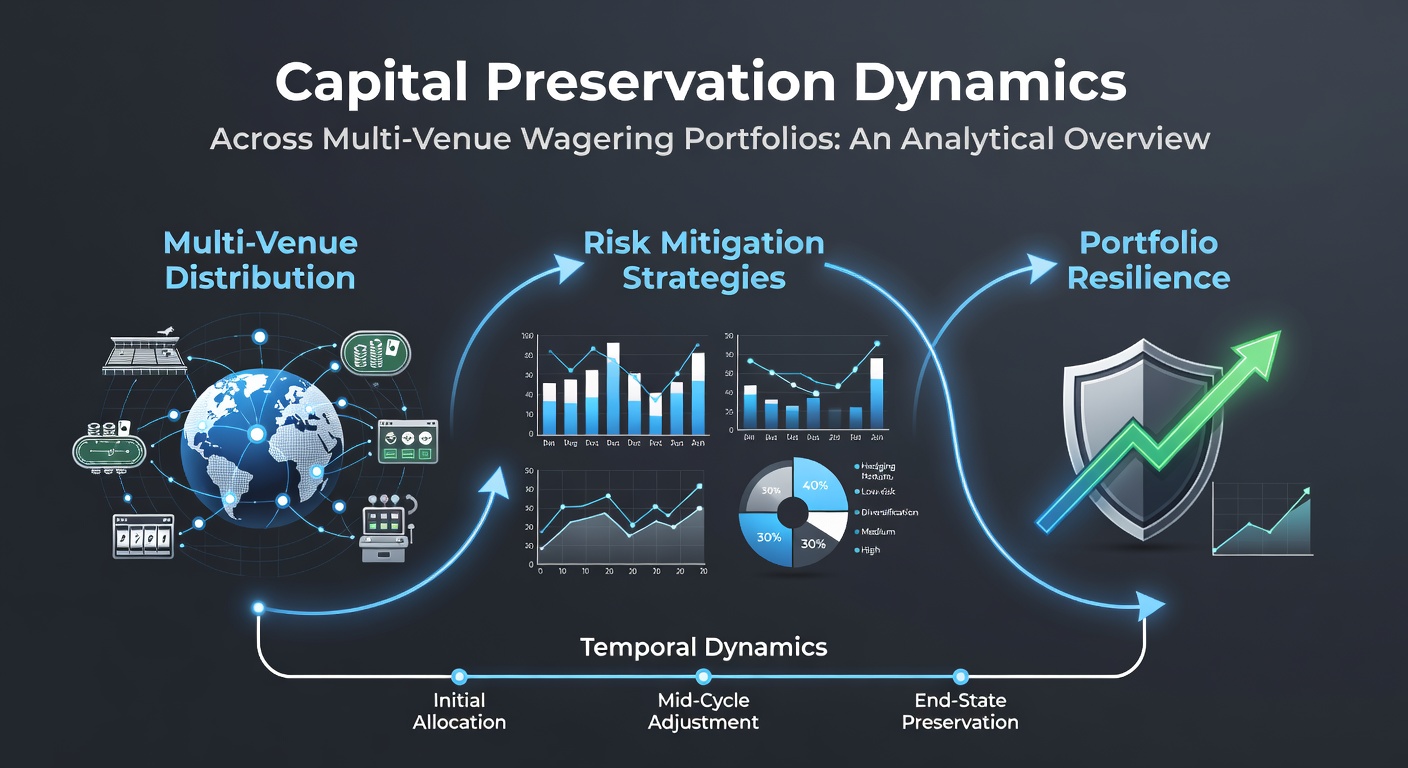
Capital Preservation Dynamics Across Multi-Venue Wagering Portfolios: An Analytical Overview
Capital preservation in multi-venue wagering portfolios involves coordinated allocation strategies that span sportsbooks, casino platforms, and lottery systems where operators maintain separate account structures yet share overlapping liquidity requirements. Observers note that participants distribute funds across these venues to manage exposure while responding to varying odds, promotional structures, and regulatory limits that differ by jurisdiction.
Core Components of Portfolio Construction
Portfolio construction begins with segmentation of available capital into distinct buckets assigned to specific venue types, and data from the American Gaming Association shows that average active accounts per user reached 3.2 platforms by early 2026. Researchers at the University of Nevada, Las Vegas documented how players adjust these segments quarterly based on historical return distributions rather than single-session outcomes. Allocation rules typically incorporate venue-specific volatility measures where sportsbooks exhibit lower variance than table games yet higher correlation during major events.
Those who track such patterns find that simultaneous positions across venues create netting opportunities when one platform's loss coincides with another's promotional credit. Regulatory filings from the Nevada Gaming Control Board indicate that cross-venue transfer volumes grew 11 percent year-over-year through April 2026, reflecting greater emphasis on maintaining liquidity buffers instead of concentrating holdings in single locations.
Risk Metrics and Allocation Models
Analytical models applied to these portfolios rely on drawdown thresholds that trigger automatic rebalancing when cumulative losses exceed preset percentages of total capital. Industry reports compiled by Gambling Research Australia highlight that participants using automated alerts reduced average session drawdowns by 14 percent compared with manual monitoring alone. Correlation matrices become essential because certain events, such as simultaneous sports tournaments and casino promotions, produce synchronized movement across venues.
Figures released in May 2026 by Canadian provincial regulators revealed that multi-venue users maintained reserve ratios averaging 22 percent of deployed capital, up from 17 percent the prior year. These reserves sit in low-volatility instruments or unplayed promotional balances that remain accessible without immediate wagering requirements. Experts have observed that such buffers prove particularly relevant during periods when multiple venues simultaneously tighten withdrawal processing times.

Venue-Specific Influences on Preservation
Each venue category imposes distinct constraints that shape preservation tactics. Sportsbooks frequently apply same-game parlay restrictions and dynamic limits that force capital rotation, whereas casino platforms enforce time-based bonuses that reward prolonged engagement. Lottery systems, by contrast, operate on fixed draw schedules that allow precise scheduling of commitments around other venue activity. Data compiled by the European Gaming and Betting Association demonstrates that users who stagger lottery participation with sports wagers experienced lower aggregate variance across the full portfolio.
Payment method fragmentation adds another layer because certain venues restrict specific processors, creating delays that affect available liquidity. Those who've examined transaction logs note that participants using multiple funding rails maintain steadier capital deployment rates during peak periods when single-method congestion occurs.
Performance Tracking Across Jurisdictions
Performance tracking requires unified reporting that consolidates results from disparate platforms into comparable metrics. Software solutions now aggregate daily P&L statements and flag when any single venue exceeds its assigned capital weight. According to filings submitted to the New Jersey Division of Gaming Enforcement, operators observed a 9 percent increase in users requesting consolidated statements between January and May 2026, indicating rising demand for cross-venue visibility.
Seasonal patterns also emerge in the data. Major sporting calendars drive temporary capital shifts toward sportsbooks, after which funds migrate back toward casino venues during quieter periods. Academic analysis of Australian wagering records found that systematic reallocation following major events preserved 8 percent more capital on average than static allocation approaches over multi-month horizons.
Conclusion
Capital preservation across multi-venue wagering portfolios rests on systematic segmentation, correlation-aware allocation, and continuous monitoring of venue-specific constraints. Regulatory data through May 2026 shows measurable adoption of these practices as users respond to evolving platform features and jurisdictional rules. Continued refinement of tracking tools and reserve protocols supports sustained management of distributed holdings without concentration in any single venue.