Digital Wagering Structures: How Mechanics Shape Resource Flows Across Prolonged Play Intervals
Written by Sam Walter · Jun 3, 2026

Digital Wagering Structures: How Mechanics Shape Resource Flows Across Prolonged Play Intervals
Structural mechanics in digital wagering platforms intersect with resource flow patterns when sessions extend beyond typical durations, creating observable distributions of capital across player accounts. Game architectures incorporate random number generators, return-to-player percentages, and feature triggers that influence how funds move through betting cycles, and researchers have mapped these elements to identify consistent trajectories in prolonged activity.
Data from platform analytics show that extended sessions often reveal layered interactions between hit frequencies and payout clusters, whereas shorter intervals tend to display more fragmented outcomes. Observers note that resource allocation follows pathways determined by the underlying code structures, including reel configurations and multiplier systems, which guide the pace at which balances rise or decline over time.
Core Components of Structural Mechanics
Game engines rely on layered algorithms that determine symbol alignments, bonus activations, and progressive elements, and these components create predictable corridors for resource movement when sessions stretch into multiple hours. Studies indicate that mechanics such as cascading reels or expanding wilds accelerate capital circulation by generating chained events, while static reel setups produce steadier but slower flows. Those who've examined server logs find that these patterns hold across various titles, with the density of interactive features dictating the rhythm of deposits and withdrawals within a single account.
Resource flow itself tracks the net transfer of funds from initial stakes through successive rounds, incorporating both incremental losses and occasional recoveries. Platform operators record these movements at granular levels, revealing how mechanics channel money into side pots or accumulated bonuses that only release after specific thresholds. Evidence suggests that when mechanics favor frequent small returns, the overall trajectory maintains steadier levels for longer periods, whereas infrequent but larger events produce sharper peaks and valleys in balance histories.
Patterns Emerging in Extended Sessions
Prolonged digital wagering reveals cumulative effects where initial capital encounters repeated mechanical filters, and data collected through June 2026 indicates that sessions exceeding three hours display distinct clustering around certain outcome sequences. Researchers tracking user behavior across multiple jurisdictions have identified that resource depletion rates slow when mechanics include frequent low-value triggers, allowing players to maintain engagement through smaller adjustments rather than rapid drawdowns. Yet the same datasets show that high-density feature games can redirect larger portions of available funds into locked states until activation conditions are met.
One analysis of aggregated session records demonstrated that mechanics involving chained multipliers tend to concentrate resource recovery toward the later stages of extended play, creating a back-loaded distribution curve. This occurs because early rounds feed into accumulating systems that only resolve after sustained input, and the resulting flow patterns differ markedly from those observed in shorter, self-contained rounds. Observers tracking these trends note that the intersection becomes most visible when comparing session logs against the programmed parameters of each title.
Modeling Approaches and Data Sources
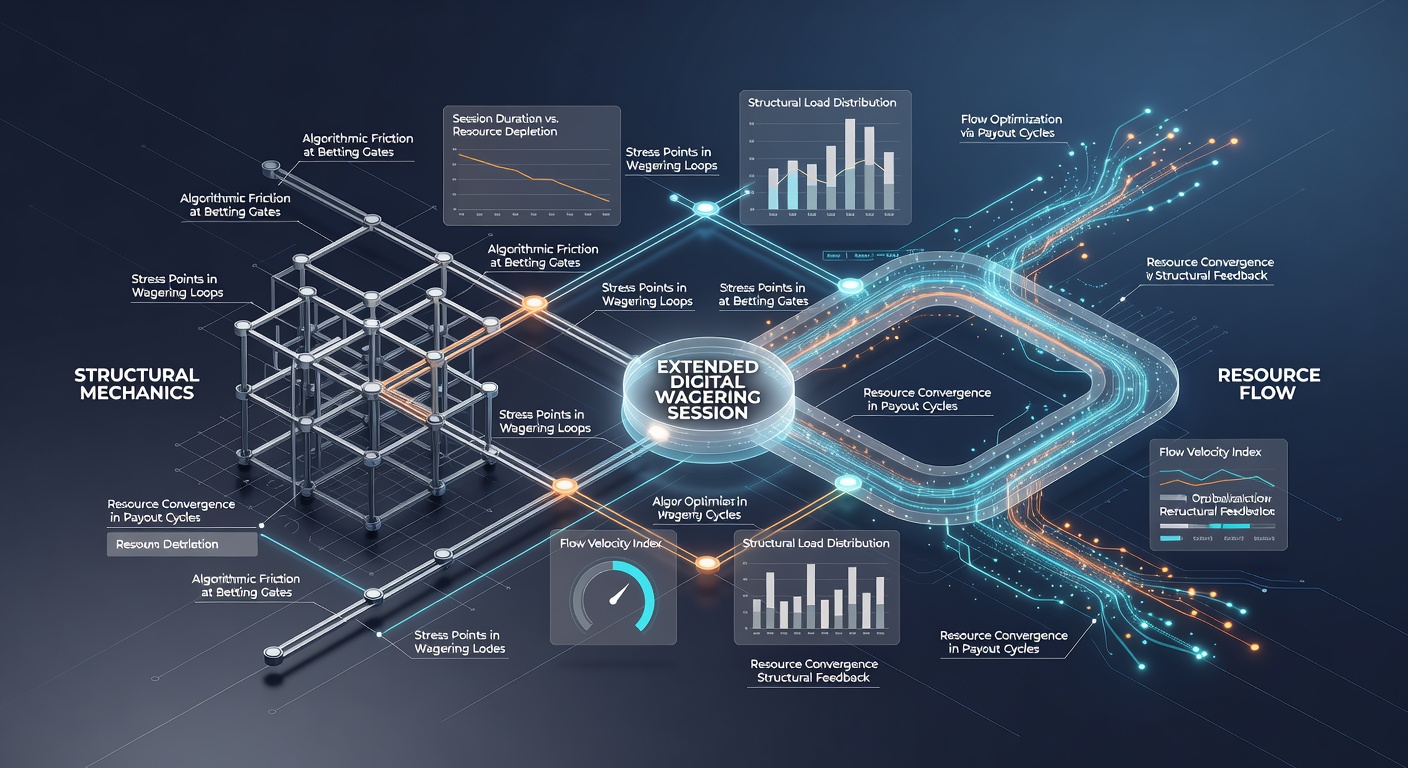
Analysts apply network mapping techniques to trace how individual bets connect to downstream outcomes, treating each mechanical element as a node that alters flow velocity. According to reports from the Responsible Gambling Council of Canada, these models highlight consistent pressure points where capital pools narrow or expand based on trigger probabilities. The approach allows for simulation of multi-hour trajectories without requiring real-time observation of every transaction.
Additional research conducted through academic partnerships in Australia has examined cross-platform comparisons, showing that structural variations between providers produce measurable differences in how resources distribute over equivalent timeframes. Figures compiled in these studies reveal that titles with denser bonus architectures sustain longer average engagement before balance thresholds trigger session conclusions. Such findings emerge from anonymized transaction streams that capture both the mechanical inputs and the resulting capital positions at regular intervals.
Regional Observations Through Mid-2026
Regulatory environments in various markets shape the availability of certain mechanics, and records through June 2026 reflect ongoing adjustments in how operators configure titles for extended play compatibility. European data repositories document shifts in feature density that correlate with observed changes in session length distributions, while North American platforms report parallel adjustments tied to compliance requirements. These modifications influence resource flow by altering the frequency and scale of mechanical interventions within each round.
Industry tracking entities continue to aggregate session metrics that feed into broader mapping exercises, and the resulting visualizations demonstrate recurring intersections between design parameters and capital movement. The patterns remain consistent enough to support predictive modeling for platform-level resource management, even as individual titles introduce incremental mechanical updates.
Conclusion
Mapping these intersections provides a framework for understanding how game structures direct capital through extended digital wagering periods, with documented patterns emerging from the interaction of algorithms and transaction sequences. Continued data collection across regions supports refinement of these models, allowing clearer delineation of the pathways that define resource trajectories in sustained sessions.