Regulatory Differences Mold Risk Allocation Formulas in Interstate Digital Betting Networks
Written by Sam Walter · May 30, 2026
Regulatory Differences Mold Risk Allocation Formulas in Interstate Digital Betting Networks
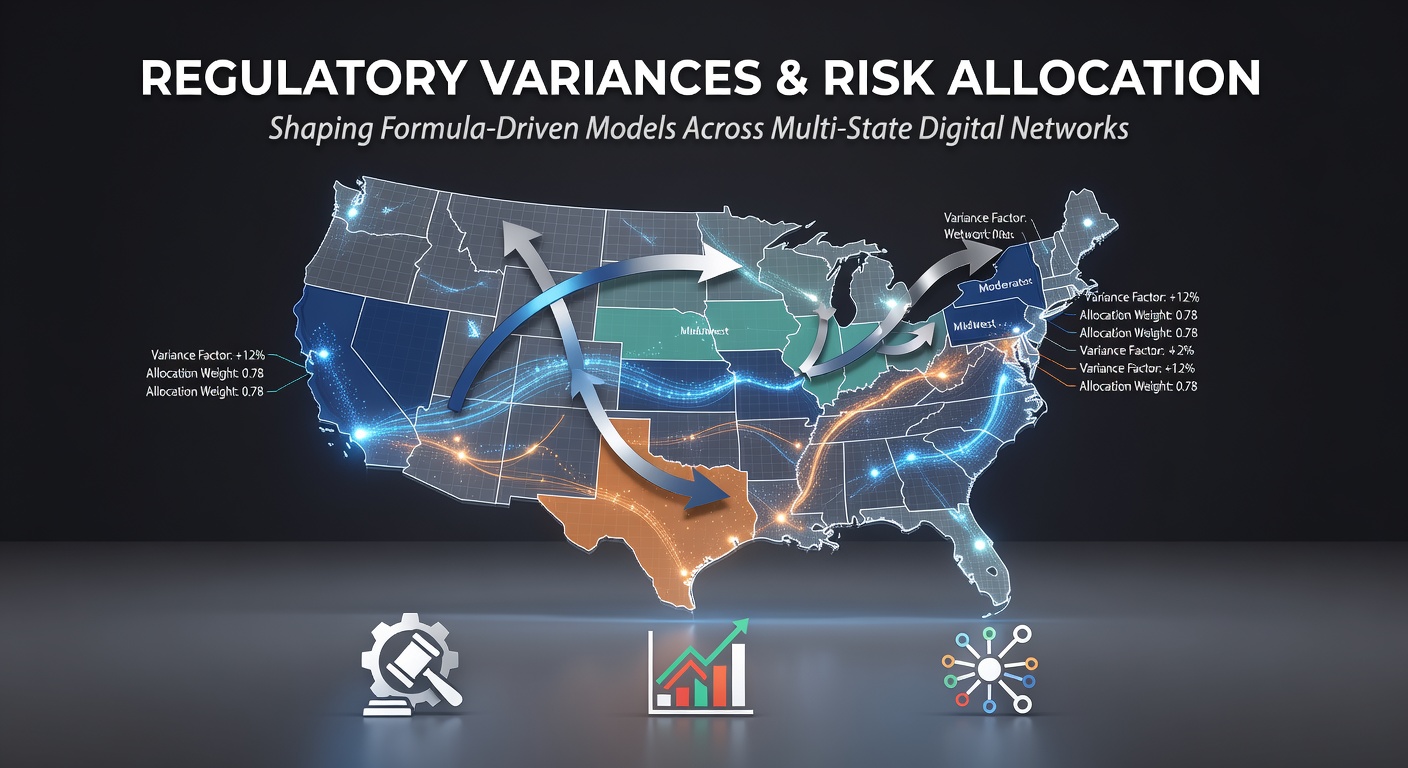
State-level differences in licensing fees, tax structures, and responsible gaming mandates continue to force adjustments in the mathematical models that online platforms use to spread risk across several jurisdictions at once, and these adjustments affect everything from reserve requirements to payout probabilities. Operators must recalibrate their formulas whenever a new state joins the network or revises its rules, which creates ongoing technical and compliance work that stretches across legal, financial, and data teams.
Core Elements of Formula-Driven Risk Models
Risk allocation formulas typically combine variables such as player volume projections, historical loss ratios, cross-state liquidity pools, and jurisdiction-specific tax rates into weighted equations that determine how much capital must sit in each market to cover potential payouts. Changes in any one variable ripple through the entire calculation, prompting operators to rerun simulations and sometimes rebalance holdings within hours of a regulatory announcement. Data from multi-state platforms shows that even small shifts in a single state's tax rate can alter reserve allocations by several percentage points across the network.
How Licensing and Tax Rules Create Divergence
Licensing costs vary widely, with some states charging flat annual fees while others tie charges to gross gaming revenue percentages that range from 6 percent to more than 50 percent depending on the product type. These differences require operators to embed state-specific multipliers directly into their risk equations so that projected returns remain accurate after taxes. When a platform operates in both a low-tax state and a high-tax state, the formula must prioritize capital retention in the higher-tax jurisdiction to avoid liquidity shortfalls during peak payout periods.
Tax structures also influence hedging decisions, since platforms often purchase insurance or lay off bets with other operators to smooth volatility, yet the cost-benefit analysis of those hedges changes with each state's tax treatment of such arrangements. Observers note that platforms active in five or more states maintain separate sub-models for each jurisdiction that feed into a master allocation engine updated daily.
Responsible Gaming Mandates and Their Formula Impact
States impose different deposit limits, loss thresholds, and self-exclusion requirements that affect player behavior data used in risk calculations. A jurisdiction requiring real-time loss notifications may see lower average bet sizes, which in turn lowers the projected variance in the risk model and allows slightly reduced reserves. Platforms must therefore maintain separate behavioral datasets for each state and refresh the weighting factors in their formulas whenever regulators update player-protection rules.

In May 2026 several states are scheduled to implement updated self-exclusion database sharing agreements that will expand the number of flagged accounts visible across state lines, and operators are already adjusting their probability inputs to account for the expected reduction in active player counts. These adjustments require recalibration of the entire network's exposure limits because fewer players in one state can shift the relative weight of risk toward other jurisdictions.
Technical Challenges in Maintaining Multi-State Consistency
Building a single master formula that respects every state's rules demands constant data synchronization between compliance teams and quantitative analysts. When one state changes its definition of taxable revenue, for example, the platform must isolate that change, propagate it through the allocation engine, and verify that downstream reports still meet audit standards in every other participating jurisdiction. Teams often run parallel simulations for 48 hours before activating any updated parameters to ensure no state-specific rule gets violated.
According to reports published by the American Gaming Association, platforms operating across multiple states have increased spending on regulatory technology by an average of 18 percent each year since 2023, largely to support the automated rule-checking layers that sit on top of their core risk formulas. The same reports indicate that the largest networks now track more than 200 distinct regulatory variables in real time.
Geographic and Product Variations Add Further Complexity
States differ not only in tax rates but also in which products they permit, and each product carries its own volatility profile that must be factored into allocation decisions. A state that allows only sports betting requires different variance assumptions than one that also permits online casino games, so the formula must apply product-specific risk coefficients before combining results across the network. Operators therefore segment their models by both jurisdiction and game type, creating dozens of sub-calculations that roll up into the final capital distribution.
Research from the University of Nevada, Las Vegas International Gaming Institute shows that platforms with the most granular segmentation achieve more stable reserve ratios during high-volume events such as major sports tournaments, because the formula can isolate localized spikes and offset them against quieter markets in other states.
Conclusion
Regulatory variances across states continue to shape the precise structure of risk allocation formulas used by multi-state digital wagering networks, requiring ongoing technical updates, separate data streams, and frequent recalibrations. As more states enter the market and existing rules evolve, platforms maintain increasingly sophisticated systems to ensure that capital distribution remains compliant and solvent in every jurisdiction simultaneously. The pattern of adaptation shows no sign of slowing as the regulatory landscape expands.