Regulatory Milestones That Have Transformed Gambling Industries Worldwide
Written by Sam Walter · Aug 26, 2026
Regulatory Milestones That Have Transformed Gambling Industries Worldwide
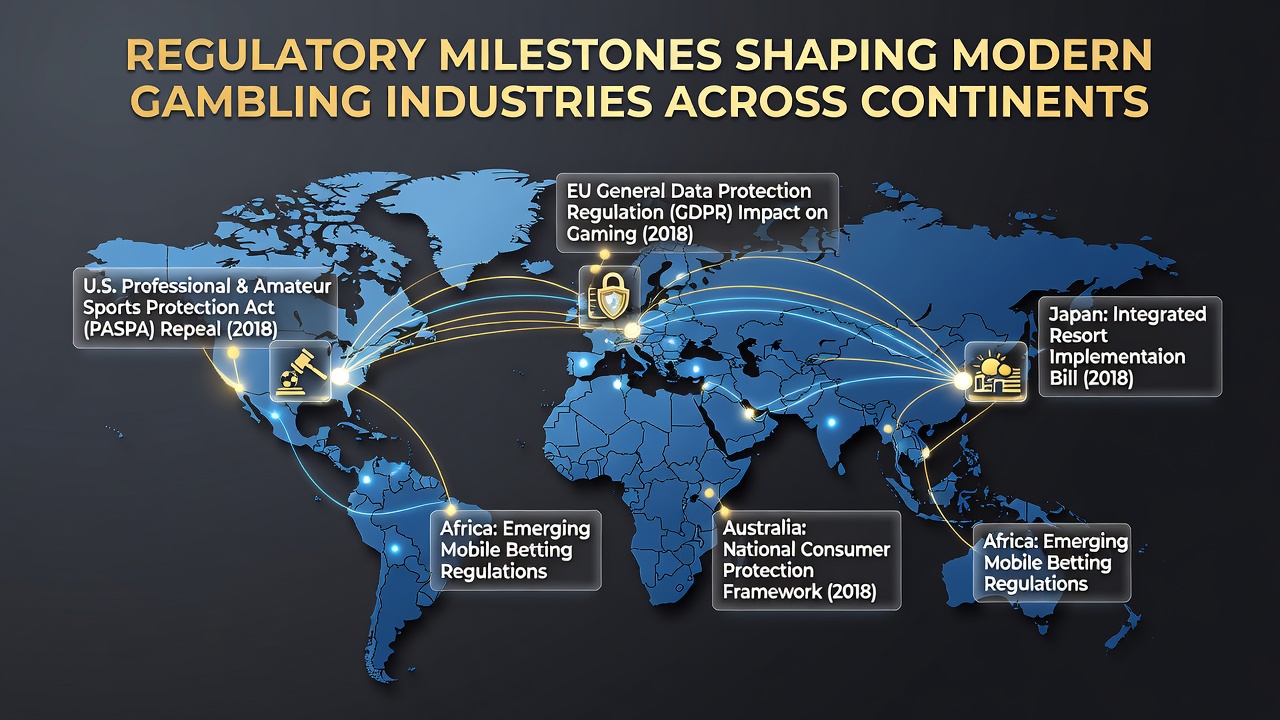
Regulatory frameworks have evolved dramatically over recent decades, and data from multiple government agencies shows these changes have reshaped how gambling operates from North America through Europe, Asia, Australia and beyond. Observers note that each continent has introduced distinct rules at different times, yet the cumulative effect has produced more standardized licensing, taxation structures and consumer protections than existed in earlier eras.
North American Developments Set Early Precedents
The United States passed the Indian Gaming Regulatory Act in 1988, which created a three-class system for tribal gaming and established the National Indian Gaming Commission to oversee compliance. This legislation opened pathways for expanded casino operations on sovereign lands while requiring tribal-state compacts in many jurisdictions. Canadian provinces followed separate tracks, with Ontario introducing regulated internet gaming platforms through the Alcohol and Gaming Commission of Ontario after legislative updates in 2019. Those who've studied these shifts know that provincial control allows tailored approaches, and figures from industry reports reveal steady revenue growth tied directly to clearer licensing requirements.
European Union Directives Drive Cross-Border Standards
The European Union advanced harmonization efforts through the 2014 Directive on the prevention of the use of the financial system for money laundering, which directly affected gambling operators by mandating stricter customer verification processes. Germany implemented its Interstate Treaty on Gambling in 2021, creating a central licensing authority and capping online stakes while permitting licensed sports betting. Data indicates that these coordinated steps reduced unlicensed market share in several member states, although enforcement challenges persist in some regions. Researchers discovered that consistent tax reporting requirements across borders helped larger operators scale operations while smaller entities adapted through partnerships.
Asian Markets Introduce Controlled Expansions
Singapore established the Casino Regulatory Authority in 2006 to oversee its two integrated resorts, imposing strict entry levies for locals and rigorous responsible gambling measures from the outset. Japan passed integrated resort legislation in 2018, paving the way for up to three casino facilities under tight government oversight, with construction timelines extending into the mid-2020s. In August 2026 additional compliance audits took effect across several Asian jurisdictions, requiring operators to submit enhanced anti-money laundering documentation on a quarterly basis. Those monitoring these markets observe that such rules have attracted major international investors while maintaining state control over licensing volumes.
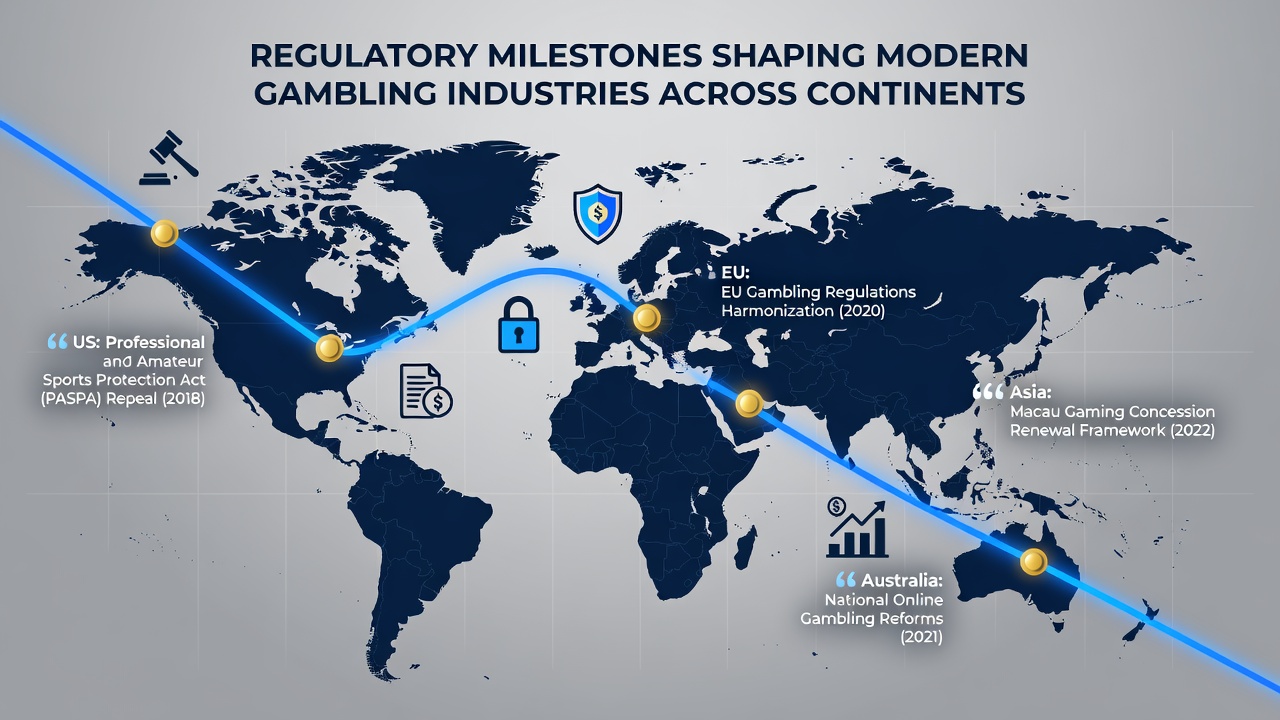
Australian states updated their frameworks through the National Consumer Protection Framework for Online Wagering, rolled out progressively since 2018. This initiative introduced mandatory pre-commitment tools and advertising restrictions that apply uniformly across participating jurisdictions. Reports from the Victorian Commission for Gambling and Liquor Regulation show measurable declines in certain high-risk betting patterns following implementation. South American countries including Brazil advanced legalization measures in 2023, creating federal oversight bodies modeled partly on European examples yet adapted for local tax structures.
African and Emerging Markets Follow Distinct Paths
South Africa consolidated its regulatory approach under the National Gambling Board, which coordinates provincial licensing and enforces uniform technical standards for gaming equipment. Kenya introduced county-level licensing alongside national guidelines in recent years, producing a hybrid system that balances local revenue needs with centralized consumer safeguards. Evidence suggests these layered approaches have supported industry growth while addressing cross-border betting concerns through information-sharing agreements.
Conclusion
Across continents the pattern remains consistent: clearer licensing, enhanced consumer protections and coordinated enforcement have become central features of modern gambling regulation. Government agencies and industry associations continue to refine these systems, with data from sources such as the Alcohol and Gaming Commission of Ontario and the Victorian Commission for Gambling and Liquor Regulation tracking ongoing impacts. The result is a global landscape where operators must navigate multiple overlapping requirements, yet the overall framework supports more transparent and accountable operations than previous decades allowed.