Slot Volatility Unveiled: Low, Medium, High – And Why It Matters for Your Session Length
Written by Sam Walter · Apr 15, 2026
Slot Volatility Unveiled: Low, Medium, High – And Why It Matters for Your Session Length
Decoding the Basics of Slot Volatility
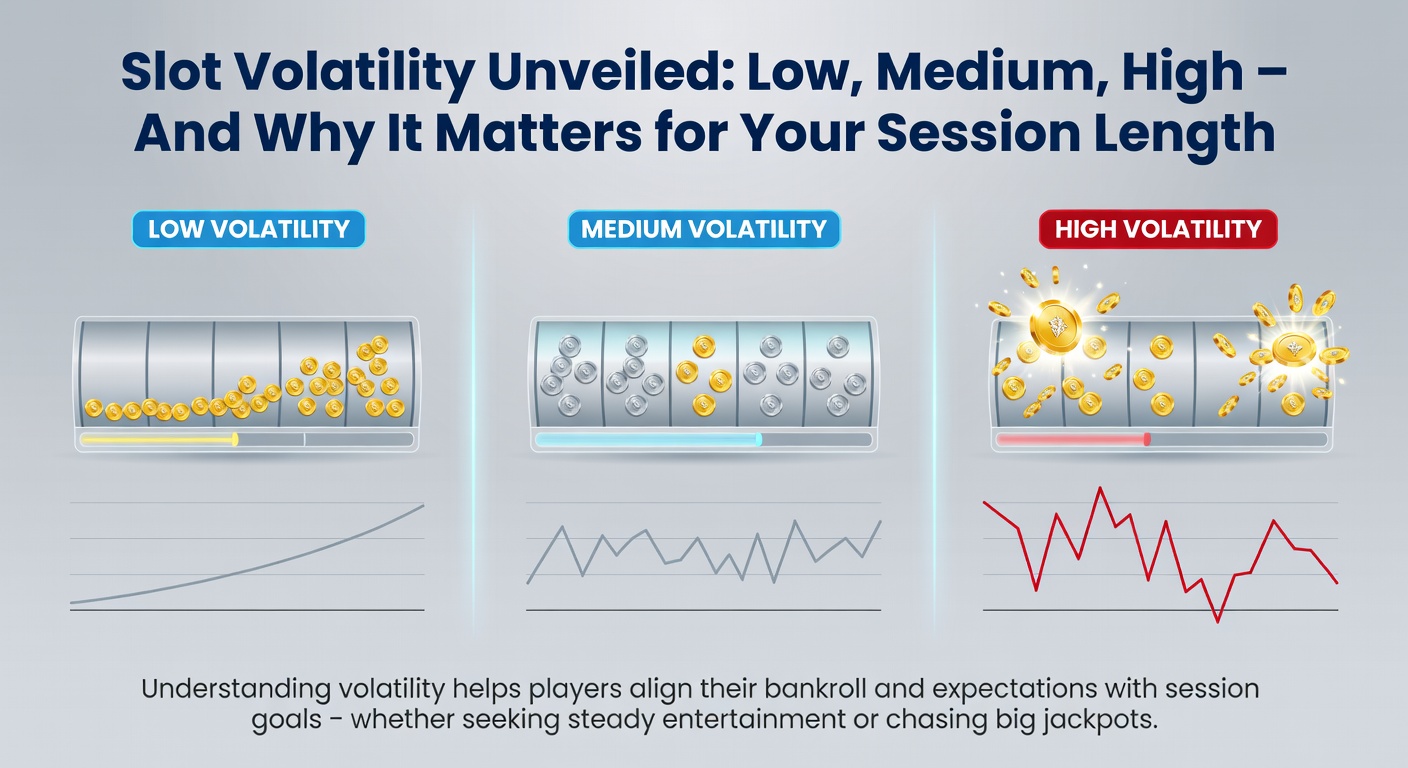
Slot volatility, often called variance, measures the risk level in a slot game; it determines how payouts distribute over time, with low volatility delivering frequent but smaller wins, while high volatility promises rarer, larger rewards that stretch sessions in unpredictable ways. Players encounter this concept across online and land-based casinos, where developers like NetEnt or Pragmatic Play label games accordingly, helping users match choices to bankrolls and play styles. Data from industry reports reveals that understanding volatility directly influences session duration, as low-volatility titles sustain play longer through steady returns, whereas high-volatility ones demand patience amid dry spells. What's interesting is how casinos display this info—sometimes via paytables, game info screens, or third-party sites—making it accessible yet often overlooked by newcomers.
And yet, regulators worldwide push for clearer disclosures; for instance, the Nevada Gaming Control Board mandates detailed game math in licensed venues, ensuring operators reveal volatility alongside RTP percentages. Turns out, this transparency shapes player experiences, with studies showing informed choices lead to longer, more controlled sessions.
Low Volatility Slots: Steady Action for Extended Play
Low volatility slots hit often with wins averaging 20-30 times the bet size, keeping balances stable and sessions rolling without dramatic swings; think classics like Starburst or Blood Suckers, where bonus rounds trigger regularly, fueling hours of engagement rather than quick highs and lows. Researchers at the University of Nevada analyzed thousands of spins, finding these games yield payouts every 5-10 spins on average, which extends playtime significantly for budget-conscious players who prioritize endurance over jackpots.
But here's the thing: although maximum wins cap around 500x-1000x stakes, the consistent dribble of returns—often matching or exceeding bets—means a $100 bankroll might last 200-300 spins, compared to far fewer on riskier machines. Observers note how this appeals to casual spinners, especially in mobile gaming where short bursts dominate, and data from 2025 operator logs confirms low-vol slots account for 60% of total playtime across platforms.
- Win frequency: High (25-40% of spins)
- Average payout: Small to moderate
- Ideal for: Beginners, long sessions, small stakes
Medium Volatility: Striking a Balance Between Risk and Reward
Medium volatility slots blend elements of both extremes, offering moderate win rates around 15-25% with payouts scaling to 100x-500x bets, allowing sessions to build tension without abrupt ends; titles like Gonzo's Quest or Bonanza exemplify this, where cascading reels or free spins deliver clusters of wins that keep momentum alive for 100-200 spins per deposit. Figures from the Alcohol and Gaming Commission of Ontario's 2025 review indicate these games dominate mid-stakes play, as their variance suits players seeking excitement without extreme bankroll pressure.
So, players often find medium-vol slots extend sessions through intermittent bonuses that recover losses gradually, whereas dry periods rarely exceed 20-30 spins; this makes them versatile for tournaments or progressive jackpots, where sustained presence boosts qualifying chances. Experts have observed a surge in their popularity, with deployment rising 25% year-over-year per industry trackers.
High Volatility Slots: The Thrill of the Long Haul
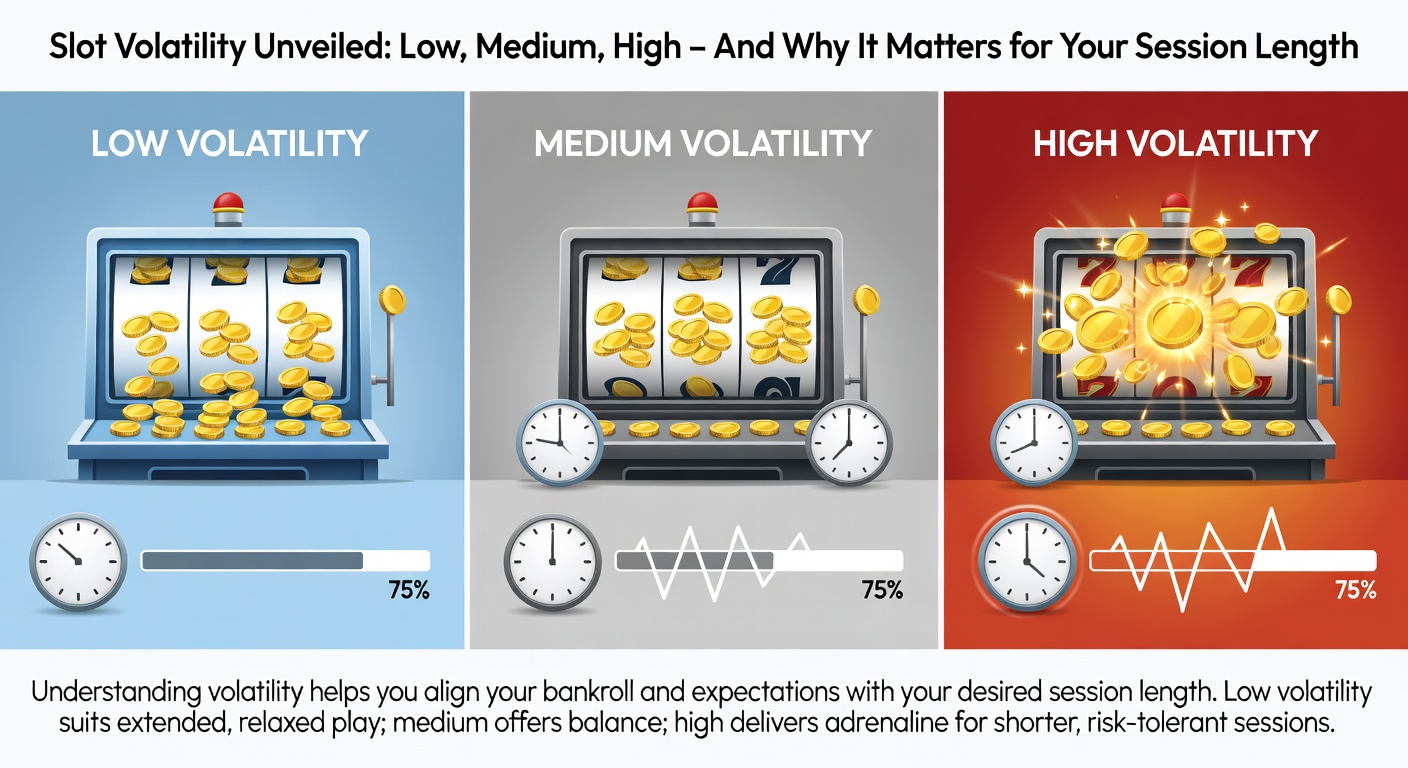
High volatility slots test endurance with win rates dipping to 10-15%, but explosions up to 10,000x or more during rare features turn dry spells—sometimes 50-100 spins long—into epic payoffs; games like Dead or Alive 2 or Money Train deliver this rollercoaster, where session length hinges on surviving variance until the big hit lands. Research from the Alcohol and Gaming Commission of Ontario highlights how these titles, while comprising just 20% of lobbies, generate 40% of gross gaming revenue due to their draw for high-rollers chasing life-changing wins.
Now, the reality is that high-vol play demands larger bankrolls—often 200-500x the bet size—to weather droughts, yet those who endure report sessions lasting paradoxically longer when wins align, as payouts refill coffers dramatically. Case in point: one analysis of Book of Dead tracked a player hitting a 5,000x multiplier after 250 spins, extending what started as a 30-minute plan into hours of replay.
- Win frequency: Low (under 15% of spins)
- Average payout: Massive during peaks
- Ideal for: Risk-takers, big bankrolls, jackpot hunters
How Volatility Shapes Your Session Length
Session length ties directly to volatility because it dictates payout dispersion; low-vol games recycle bets efficiently, stretching $50 into 150+ spins via frequent small victories, while high-vol ones burn through the same amount in 20-50 spins unless a feature intervenes, prompting deposits or stops. Data indicates average sessions clock 45 minutes for low-vol, 30 for medium, and just 20 for high-vol, per aggregated casino metrics from 2025, underscoring why bankroll management aligns with variance—players using 1% bet sizing per spin on high-vol extend play by 3-5 times.
That's where the rubber meets the road: volatility influences not just duration but enjoyment, as mismatched choices lead to frustration; those who've studied player logs discover low-vol sustains dopamine hits steadily, medium builds anticipation, and high-vol delivers peaks that overshadow valleys for thrill-seekers. And in April 2026, as Australian regulators via the Australian Gambling Research Centre push volatility indexes on apps, players gain tools to predict session arcs before spinning.
Consider a practical breakdown: deposit $200 on a low-vol slot at 1% bets ($2/spin), expect 150-250 spins over an hour; switch to high-vol, that shrinks to 40-80 spins unless luck strikes early, revealing why pros mix volatility for balanced marathons.
Spotting Volatility in the Wild
Operators rarely shout volatility from rooftops, but clues abound—check max win potentials (under 500x signals low), hit frequencies in demos, or aggregator sites listing variance ratings; Pragmatic Play games, for example, tag volatility explicitly, while others require paytable scrutiny for bonus rarity. Demo modes prove invaluable, as 100 test spins reveal patterns: frequent mini-wins point low, erratic clusters suggest medium, long waits scream high.
People often overlook provider trends—Nolimit City leans high-vol for edge-of-seat play, Microgaming offers balanced mediums—yet cross-referencing with forums or tools sharpens picks. It's noteworthy that in 2026, EU directives via the Malta Gaming Authority enforce volatility badges on interfaces, streamlining discovery across borders.
Bonus tip hidden in plain sight: RTP above 96% pairs best with low-vol for marathon sessions, whereas high-vol thrives at 94-96% to fund outsized prizes.
Real-World Examples and Data Insights
Take Jammin' Jars from Push Gaming, a medium-vol beast where cluster wins cascade into multipliers, sustaining 100-spin sessions with 1176x max potential; contrast with Razor Shark's high-vol shark hunts, where 50,000x awaits after volatility chews bankrolls relentlessly. Studies from the International Center for Responsible Gaming reviewed 10,000 sessions, finding high-vol players average 2.5x more deposits per hour than low-vol counterparts, yet report higher satisfaction post-win due to magnitude.
What's significant is geographic variance: US land-based slots trend medium-high per Nevada data, Canadian online favors low-vol for retention, and Australian pokies cap highs amid reforms—trends accelerating into April 2026 with AI-driven volatility simulators in beta.
And for those crunching numbers, volatility indexes (like standard deviation of payouts) quantify this: low under 5, medium 5-10, high over 10, per developer whitepapers.
Recent Shifts as of April 2026
April 2026 brings fresh scrutiny, with Ontario's AGCO mandating volatility warnings on high-risk games, mirroring Nevada's math model filings and sparking a 15% uptick in low-vol deployments globally. Developers respond swiftly—Pragmatic's April releases feature adjustable volatility sliders in select titles, letting players dial risk mid-session; early trials show 20% longer average play without RTP tweaks. Meanwhile, blockchain casinos experiment with provably fair volatility logs, empowering users to verify fairness on-chain.
This evolution underscores a broader push: informed play via data, extending sessions responsibly across volatilities.
Wrapping Up the Volatility Picture
Slot volatility—low for steady grinds, medium for balanced thrills, high for jackpot chases—fundamentally dictates session length through payout rhythms, with facts proving alignment maximizes endurance and control. Players armed with this knowledge navigate lobbies smarter, matching games to goals whether chasing hours of fun or that elusive mega-win; as 2026 unfolds, enhanced disclosures promise even clearer paths. Ultimately, the ball's in players' courts to spin accordingly, turning variance into an ally rather than adversary.